Car Maintenance Tips for South African Drivers in 2026

Advertisements
Car maintenance tips South Africa 2026 include following the manufacturer’s service schedule, checking tyres, brakes, oil, coolant, lights and battery, understanding dashboard warnings, choosing the correct engine oil, and using an accredited workshop for repairs beyond basic DIY maintenance.
Car maintenance tips South Africa 2026 can help motorists identify problems earlier, reduce avoidable breakdowns and keep important safety systems in working condition.
Good car maintenance does not mean replacing parts unnecessarily or following one universal service interval, because requirements differ according to vehicle model, engine, mileage, age and operating conditions.
Advertisements
The owner’s manual and manufacturer service schedule should remain the primary reference, supported by regular visual checks and professional diagnosis when something changes in the way the vehicle drives, sounds or behaves.
Essential Checks for Your Vehicle
Routine checks can reveal developing problems before they lead to a roadside breakdown or more expensive damage.
Important areas include tyres, brakes, engine oil, coolant, lights, battery condition, windscreen visibility and other fluids specified for the vehicle.
The exact frequency depends on the vehicle and how it is used, but checking basic safety items before long trips is particularly sensible.
Key Areas to Check
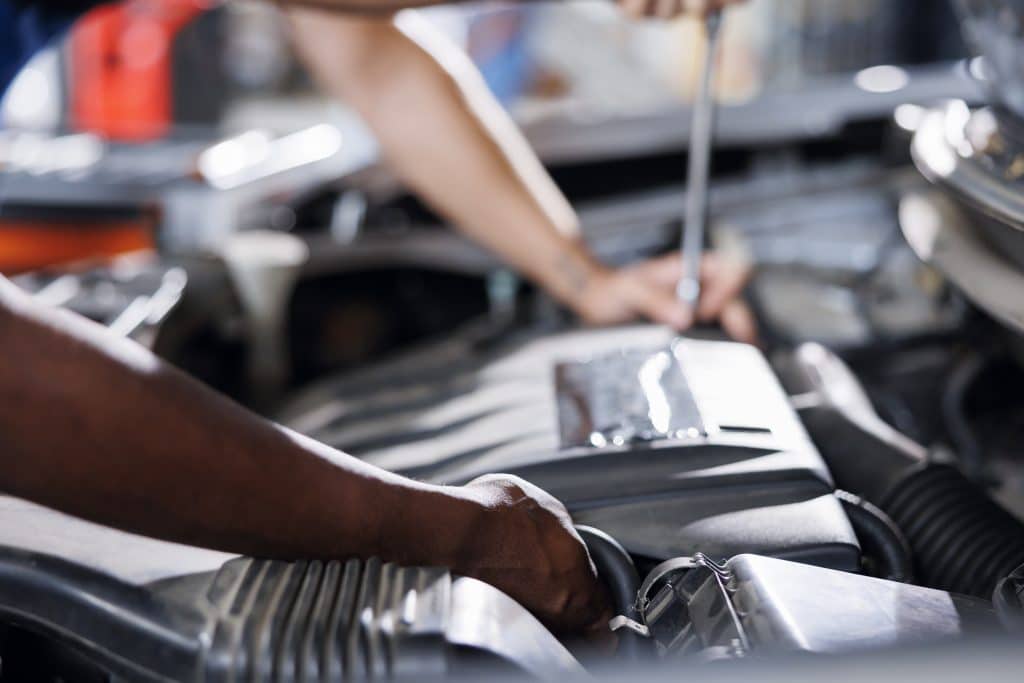
Engine oil should remain within the range specified by the manufacturer, while coolant should be maintained at the prescribed level and checked only using safe procedures described in the owner’s manual.
Tyres deserve particular attention because pressure, tread condition, cuts, bulges and uneven wear directly affect braking, handling and road safety.
Brakes, lights and the battery should also be monitored, especially if braking feel changes, lights stop working or the vehicle becomes slow to start.
- Engine oil: Check level and investigate leaks or unexpected consumption.
- Tyres: Check pressure, tread, cuts, bulges and uneven wear.
- Brakes: Investigate changes in pedal feel, stopping performance or unusual noises.
- Coolant: Maintain the correct level and use the specified coolant type.
- Lights: Confirm headlights, brake lights, indicators and hazard lights operate correctly.
Scheduled Car Maintenance
The manufacturer’s service schedule should determine when items such as oil, filters, spark plugs, belts, fluids and other components require inspection or replacement.
Intervals may be stated according to kilometres, time or whichever comes first, and severe operating conditions can sometimes require different car maintenance intervals.
Keeping invoices and service records can also help future technicians understand what has already been performed and may be relevant to warranty or resale documentation.
Tyre Safety in South Africa
Tyres are among the most important safety components because they provide the vehicle’s contact with the road during acceleration, braking and cornering.
South African road traffic rules require a visible tread pattern and generally at least 1 mm of tread depth, or tread remaining above the built-in wear indicator where one is fitted.
The legal minimum should be viewed as a final limit rather than an ideal car maintenance target, particularly because wet-road grip deteriorates as tread becomes shallower.
Check Pressure and Tread Regularly
Tyre pressure should be set according to the vehicle manufacturer’s specification, commonly found in the owner’s manual, door aperture or fuel-flap area.
Pressure should ideally be checked when the tyres are cold because heat generated during driving increases internal pressure and can distort the reading.
The spare tyre should also be checked where one is fitted, along with its jack, wheel tools or puncture-repair equipment.
Watch for Uneven Wear and Damage
Uneven wear can indicate incorrect pressure, wheel-alignment problems, worn suspension components or other mechanical issues.
Deep cuts, exposed cords, structural bulges or severe tread damage should be assessed promptly rather than waiting for the tyre to reach its legal tread limit.
The Automobile Association of South Africa recommends regular inspections because damaged, underinflated or excessively worn tyres can compromise safety.
How to Choose the Right Engine Oil
The correct engine oil is determined by the engine manufacturer’s specification rather than by choosing synthetic oil simply because it is marketed as more advanced.
The owner’s manual normally specifies the required viscosity grade together with performance specifications such as API, ACEA or a manufacturer-specific approval.
Using oil that fails to meet those requirements can affect lubrication, emissions systems, fuel economy and engine protection.
Types of Engine Oil
Engine oils can broadly include conventional mineral oils, synthetic blends and fully synthetic formulations, although the appropriate choice depends on the vehicle specification.
Synthetic oils can provide strong performance across temperature extremes and longer service intervals in engines designed for them, but this does not mean every vehicle requires the most expensive synthetic product.
Older engines also should not automatically be switched to a different oil type without considering manufacturer guidance and the mechanical condition of the engine.
- Mineral oil: Suitable for certain engines where the manufacturer specification permits it.
- Synthetic blend: Combines mineral and synthetic base oils.
- Full synthetic: Common in many newer vehicles and demanding operating conditions.
Understanding Viscosity Ratings
A designation such as 5W-30 describes how an oil behaves across different temperature conditions rather than simply indicating whether it is thick or thin.
The number before the W relates to low-temperature characteristics, while the second number describes viscosity performance at higher operating temperature.
Drivers should use the viscosity range approved by the vehicle manufacturer rather than selecting a grade solely according to local climate or personal preference.
Do Not Change Oil More Often Without a Reason
The idea that changing oil as frequently as possible is always better can waste money and resources without providing additional protection.
Modern service intervals vary substantially between vehicles, particularly because engine design, oil specification and monitoring systems have changed over time.
Follow the manufacturer interval unless operating conditions, a warning indicator or professional diagnosis provides a legitimate reason for earlier service.
Short Trips Can Affect Oil Service Needs
Repeated short journeys may prevent an engine from spending enough time at full operating temperature, depending on vehicle design and driving conditions.
Other demanding use can include extensive stop-start driving, dust, towing or other operating conditions specifically identified by the manufacturer.
If the manual specifies a severe-service schedule, motorists whose driving matches those conditions should follow that schedule rather than the standard interval.
Top Tools Every Car Owner Should Have
A small set of appropriate tools can help with inspections, emergencies and basic car maintenance without encouraging inexperienced owners to perform safety-critical repairs.
Useful equipment can include a tyre-pressure gauge, torch, basic hand tools and the wheel-changing equipment supplied or approved for the vehicle.
More advanced work should only be attempted when the person understands the procedure, has appropriate equipment and can perform the task safely.
Essential Tools
A tyre-pressure gauge is one of the simplest useful tools because correct inflation affects tyre wear, handling and fuel consumption.
A suitable socket or wheel wrench can be useful for changing a wheel, while screwdrivers and basic hand tools can assist with manufacturer-approved minor tasks.
If the vehicle has a spare wheel, owners should also know where the jack points are and how the manufacturer’s jack is intended to be used.
- Tyre-pressure gauge: For checking inflation against the manufacturer’s specification.
- Wheel wrench: For emergency wheel changes where applicable.
- Basic screwdrivers and sockets: For suitable minor car maintenance.
- Torch: Useful for roadside inspection in poor visibility.
Additional Useful Tools
An OBD-II diagnostic reader can retrieve fault codes on compatible vehicles, but a code is a diagnostic starting point rather than proof that one particular component must be replaced.
A suitable battery charger or maintainer can be useful for vehicles left unused for extended periods, provided it is compatible with the battery technology.
Cleaning supplies, gloves and a basic emergency kit can also be useful without involving complex mechanical work.
- OBD-II reader: Retrieves diagnostic information on compatible vehicles.
- Battery charger or maintainer: Useful when correctly matched to the battery.
- Emergency kit: Consider reflective equipment, a torch and other appropriate roadside items.
Using a Jack Safely
A vehicle jack designed for roadside wheel changes should not be treated as a safe support for working underneath a vehicle.
If a vehicle needs to be raised for underbody work, appropriate rated axle stands and correct lifting points are essential.
Anyone unfamiliar with safe lifting procedures should leave under-vehicle repairs to a qualified workshop because a falling vehicle can cause fatal injuries.
Follow the Vehicle’s Lifting Instructions
Vehicle manufacturers identify specific jacking points designed to support the load without damaging the body or undercarriage.
The vehicle should be positioned on a stable, level surface where possible and secured according to the procedure in the owner’s manual.
Improvising with unsuitable lifting points, unstable surfaces or unsupported jacks creates unnecessary risk.
The Best Places for Car Servicing in South Africa
South African motorists can choose among dealerships, independent workshops and specialist repairers depending on the work required.
For independent servicing, the Retail Motor Industry Organisation recommends checking whether a workshop is accredited through organisations such as the Motor Industry Workshop Association.
Accreditation provides a South African reference point for workshop standards and access to structured dispute-resolution processes if a problem cannot be resolved directly.
Types of Service Centres
A franchised dealership can be useful for manufacturer-specific diagnostics, campaigns, recalls and vehicles still operating under particular manufacturer plans or warranty conditions.
An independent workshop can also provide routine servicing and repairs, and South African motorists can verify RMI or MIWA accreditation when assessing a provider.
Specialist workshops can be appropriate for areas such as transmissions, auto electrical systems, diesel injection, body repairs or other work requiring specialist equipment and experience.
- Dealerships: Manufacturer-focused servicing and diagnostics.
- RMI/MIWA-accredited workshops: Independent service and repair with recognised industry accreditation.
- Specialists: Useful for repairs requiring specialised equipment or expertise.
What to Look For
The original article referred to ASE certification, but this is primarily a United States credential and is not the appropriate benchmark for choosing a South African workshop.
Instead, consumers can verify RMI or MIWA accreditation and request a written estimate that clearly identifies expected labour, parts and authorised work.
A reputable workshop should also communicate additional work before performing it and provide documentation of completed repairs and parts fitted.
- Accreditation: Verify RMI or relevant association membership where applicable.
- Written estimates: Understand expected costs before authorising repairs.
- Warranty information: Ask what guarantee applies to workmanship and parts.
- Clear communication: Additional work should be discussed before proceeding.
Roadworthy Certificates in South Africa
A roadworthy test and routine vehicle servicing are related to safety but are not the same thing.
The South African Government states that a vehicle must be tested for roadworthiness before it is registered in a new owner’s name, while certain public-transport and heavy vehicles require periodic testing.
Passing a roadworthy inspection also does not replace ongoing car maintenance because mechanical condition can change after the inspection.
Roadworthiness Remains the Owner’s Responsibility
The government states that responsibility for having the vehicle tested when required rests with the vehicle owner.
Testing can be performed at an authorised public or private vehicle testing station.
Motorists should verify the requirements applicable to their vehicle category rather than assuming every private passenger car requires an annual roadworthy test.
Understanding Warning Lights on Your Dashboard
Dashboard warning lights vary among manufacturers, so the owner’s manual remains the correct reference for the meaning and required response to each symbol.
Some lights indicate information or a system status, while others warn of a fault that requires prompt attention.
The colour, symbol and whether the light is steady or flashing can all affect how urgently the vehicle should be assessed.
Common Warning Lights
A check-engine light can represent many different engine or emissions faults and usually requires diagnostic investigation rather than guessing which component has failed.
An oil-pressure warning is potentially much more urgent because continued operation with inadequate oil pressure can cause severe engine damage.
Battery charging, brake, coolant temperature and tyre-pressure warnings also require responses appropriate to the vehicle and circumstances.
- Check engine: Indicates an engine or emissions-related fault requiring diagnosis.
- Oil pressure: Potentially serious; stop safely and follow manufacturer guidance.
- Battery/charging: May indicate a charging-system problem.
- Brake warning: Can indicate parking-brake status or a brake-system issue depending on the vehicle.
- TPMS: Indicates a tyre-pressure issue on vehicles equipped with the system.
What to Do When a Warning Light Comes On
Do not assume that every flashing warning light requires exactly the same response because dashboard conventions differ between manufacturers.
If a red oil-pressure, overheating or other critical warning appears, safely stopping the vehicle and checking the manual may prevent significant damage or danger.
If the meaning is unclear or the vehicle behaves abnormally, professional diagnosis is safer than continuing to drive while hoping the warning disappears.
Brakes Require Professional Attention
Brake systems are safety-critical, and changes in braking performance should be investigated rather than postponed until the next scheduled service.
Warning signs can include grinding or scraping sounds, unusual pedal feel, pulling under braking, vibration or increased stopping distance.
Brake wear is influenced by driving conditions, vehicle mass, driving style and component design, so there is no universal replacement interval for every vehicle.
Do Not Judge Brakes by Noise Alone
Some brake noises can occur temporarily because of moisture, dust or material characteristics, while other sounds indicate severe wear.
The absence of noise also does not prove that pads, discs, fluid or other braking components remain in good condition.
Periodic professional inspection is therefore more reliable than waiting for an obvious symptom to appear.
Battery Car Maintenance and Starting Problems
Battery performance can deteriorate gradually, sometimes becoming obvious only when a vehicle struggles to start.
Drivers can visually inspect accessible terminals for corrosion and watch for slow cranking, electrical irregularities or repeated starting difficulty.
Modern vehicles can also have sophisticated charging systems, so repeated battery problems may require diagnosis rather than simply replacing the battery.
Battery Type Matters
Vehicles using start-stop systems may require AGM, EFB or another specific battery technology rather than a conventional replacement battery.
Installing an unsuitable battery can affect durability or vehicle systems, and some modern vehicles may require battery registration or electronic configuration after replacement.
Check the manufacturer’s specification or use a competent workshop before selecting a replacement solely according to physical size or price.
Tips for Saving on Car Repairs
Reducing repair costs starts with preventing avoidable damage and understanding what work the vehicle genuinely requires.
Following the service schedule, monitoring tyres and fluids and responding early to abnormal sounds or warning lights can prevent some minor problems from developing further.
For non-emergency repairs, comparing written quotations can also help motorists understand whether pricing and proposed work are reasonable.
Regular Car Maintenance
Regular car maintenance can reduce the risk of preventable mechanical deterioration, although it cannot eliminate all failures.
Follow the vehicle’s prescribed service intervals rather than relying on generic rules about how often oil, filters or other components must be replaced.
Keeping tyres correctly inflated and investigating leaks, unusual noises and warning lights early can also reduce the chance of secondary damage.
DIY Repairs
Some low-risk tasks can be appropriate for owners who understand the procedure, such as replacing wiper blades, checking tyre pressure or replacing certain accessible filters.
Tasks involving brakes, steering, airbags, fuel systems, high-voltage hybrid or electric systems and vehicle lifting require substantially greater knowledge and safety precautions.
Online tutorials can be useful references, but they should not replace vehicle-specific technical information or professional assistance for safety-critical repairs.
- Wiper blades: Often straightforward when the correct replacement is used.
- Tyre pressure: Easy to monitor using a reliable gauge.
- Some filters: May be suitable for DIY replacement depending on vehicle access.
Shop Around for Services
For work that is not immediately safety-critical, obtaining more than one quotation can help motorists compare labour, parts and proposed repairs.
Comparisons should be like-for-like because a lower estimate may use different parts, exclude diagnostic work or provide different warranty coverage.
When choosing an independent South African workshop, RMI or MIWA accreditation can add another layer of accountability beyond price alone.
Stay Informed About Your Vehicle

Learn the normal sounds, temperatures, warning indicators and driving behaviour of your vehicle so changes are easier to recognise.
Keep the owner’s manual accessible and retain service documentation, repair invoices and information about replacement parts.
Being informed does not mean diagnosing every fault yourself; it means having enough information to notice changes and discuss them clearly with a technician.
Car Maintenance Tips for Long South African Road Trips
Before a long journey, the Automobile Association recommends inspecting important safety items including tyres, lights and vehicle loading.
Tyres should be inflated to the manufacturer’s recommended pressure, including adjustments specified for heavy loads where applicable, and the spare should not be forgotten.
Windows, mirrors and lights should also be clean and functional because visibility becomes particularly important during night driving or poor weather.
Do Not Overload the Vehicle
Every vehicle has maximum permitted loading limits, and exceeding them affects braking, steering, tyre loading and stability.
Luggage should also be secured so that it cannot move dangerously during emergency braking or a collision.
Drivers planning to tow or carry unusually heavy loads should check the relevant vehicle, tyre and towing specifications before travelling.
Conclusion
Car maintenance tips South Africa 2026 should begin with the manufacturer’s service schedule and regular attention to tyres, brakes, fluids, battery condition, warning lights and other safety-related components.
Simple checks and carefully selected DIY tasks can save money, but safety-critical repairs and complex diagnostics are better handled by properly equipped and qualified professionals.
For South African motorists, using RMI or MIWA-accredited workshops, understanding local tyre requirements and responding early to mechanical warning signs can support safer and more predictable vehicle ownership.
FAQ – Frequently Asked Questions About Car Maintenance
Why is regular car maintenance important?
Car Maintenance can identify wear, leaks and developing faults before they become more serious, while helping important safety and mechanical systems operate as intended.
What is the legal minimum tyre tread depth in South Africa?
South African road traffic rules generally require at least 1 mm of tread depth across the relevant tread area, or tread remaining above a built-in wear indicator where applicable. Safety authorities may recommend replacing tyres earlier.
What should I do if a warning light comes on?
Check the owner’s manual and consider the warning colour and vehicle behaviour. Critical warnings such as oil-pressure or overheating warnings can require stopping safely rather than continuing to drive.
Can I perform my own car repairs?
Basic tasks such as checking tyre pressure or replacing some wiper blades may be suitable for DIY car maintenance, but safety-critical or technically complex repairs should be left to appropriately qualified professionals.
How can I find a reliable mechanic in South Africa?
Check independent reviews and recommendations, ask for written estimates and warranty information, and consider verifying whether the workshop is accredited by the RMI, MIWA or another relevant South African industry association.
Author